History Of Nigeria
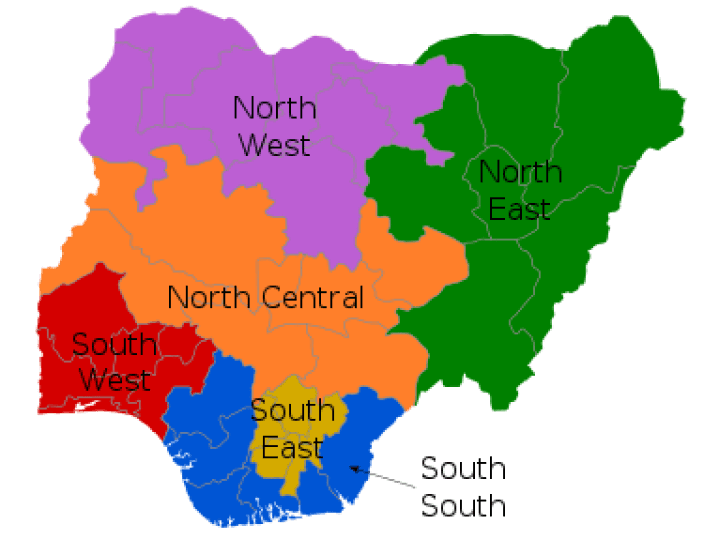
Nigeria has 36 states and a Federal Capital Territory. In alphabetical order, the states are as follows: Abia, Adamawa, Akwa Ibom, Anambra, Bauchi, Bayelsa, Benue, Borno, Cross River, Delta, Ebonyi, Edo, Ekiti, Enugu, Gombe, Imo, Jigawa, Kaduna, Kano, Katsina, Kebbi, Kogi, Kwara, Lagos, Nasarawa, Niger, Ogun, Ondo, Osun, Oyo, Plateau, Rivers, Sokoto, Taraba, Yobe, Zamfara. The states are further divided into 774 Local Government Areas.
The Federal Capital Territory is located in Abuja, the national capital city of Nigeria.
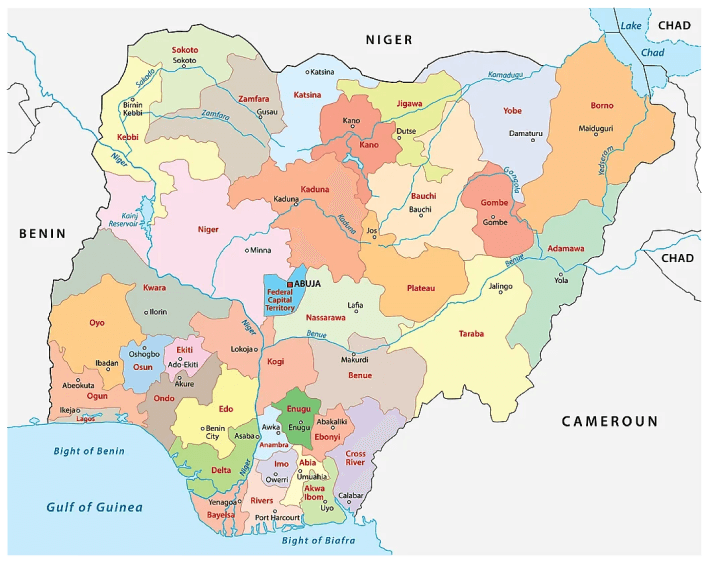
Nigeria is a West African country located in the Northern and Eastern Hemispheres of the Earth. It is bordered by four countries. These are Niger, Chad, Cameroon, and Benin to the north, northeast, east, and west respectively. Nigeria also has a coastline on the Gulf of Guinea. Nigeria Bordering Countries: Cameroon, Chad, The Niger, Benin. Nigeria is a West African country located in the Northern and Eastern Hemispheres of the Earth. It is bordered by four countries. These are Niger, Chad, Cameroon, and Benin to the north, northeast, east, and west respectively. Nigeria also has a coastline on the Gulf of Guinea.
Nigeria Bordering Countries: Cameroon, Chad, The Niger, Benin. Nigeria is a West African country located in the Northern and Eastern Hemispheres of the Earth. It is bordered by four countries. These are Niger, Chad, Cameroon, and Benin to the north, northeast, east, and west respectively. Nigeria also has a coastline on the Gulf of Guinea. Nigeria Bordering Countries: Cameroon, Chad, The Niger, Benin.
History Of Lagos
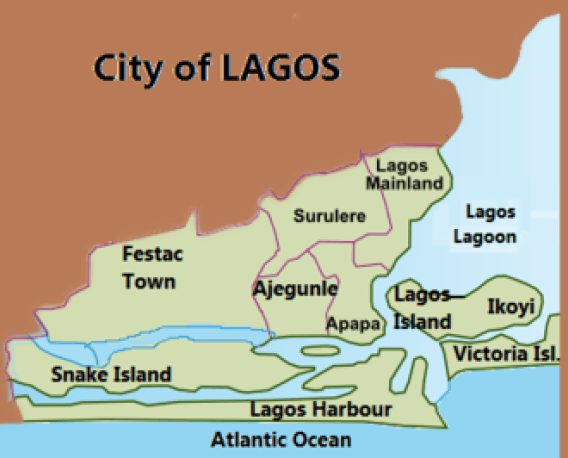
The island of Lagos was inhabited by Yoruba fishermen and hunters at least since the 15th century. In 1472, Portuguese explorers arrived, and began to trade, eventually followed by other Europeans. The area fell under the domain of Benin in the 16th century. By 1600, it served as a frontier town, and Benin limited its local presence to soldiers led by four military commanders. This military presence as well as the exchange with European traders resulted in economic growth, as locals would travel along the coast and from further inland to Lagos Island for trade; at this point, clothes were the main item sold at and exported from the island as well as Benin as a whole. In the 17th century, the trade with the Portuguese also began to increase, as Onim became a center of the Atlantic slave trade. The local obas (kings) developed good relations with the Portuguese.
By the early 19th century, it was a small kingdom and a tributary to the Oyo Empire. Like many West African states, Onim developed strong diplomatic as well as economic links to South America. It sent embassies to the Portuguese colony of Brazil, and became one of the first countries to recognize the independence of Brazil in 1823. Meanwhile, the Oyo Empire had begun to collapse. This allowed Lagos to assume the leading economic position regionally, becoming the most important market in the Yoruba territories as well as growing substantially.
From the crowning of Ado as its Oba, Lagos (then called Eko) had served as a major center for slave-trade, from which then Oba of Benin and all of his successors for over two centuries supported — until 1841, when Oba Akitoye ascended to the throne of Lagos and attempted to ban slave trading. Local merchants strongly opposed the intended move, and deposed and exiled the king, and installed Akitoye's brother Kosoko as Oba. Exiled to Europe, Akitoye met with British authorities, who had banned slave trading in 1807, and who therefore decided to support the deposed Oba to regain his throne. In the 'Reduction of Lagos', the British militarily intervened in 1851, reinstalling Akitoye as Oba of Lagos. Lagos subsequently signed a treaty which ushered in the British consular period. In practical terms, however, British influence over the kingdom had become absolute.
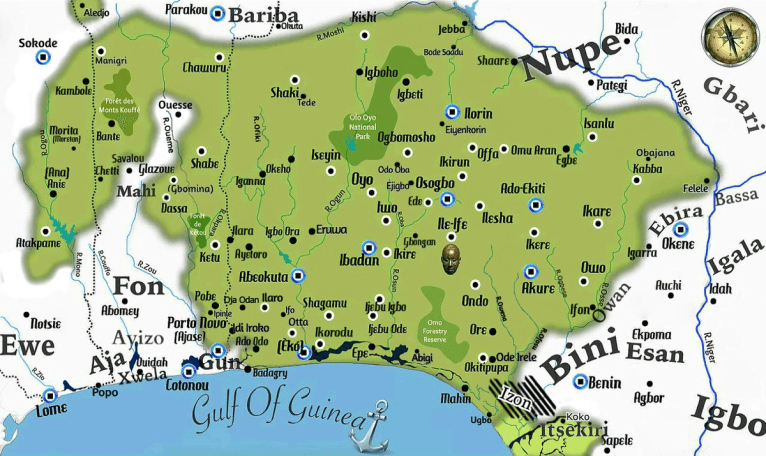
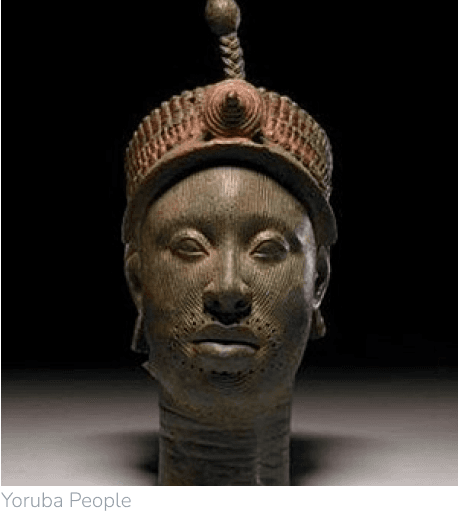
All Obas of Lagos trace their lineage to Ashipa,a war captain of the Oba of Benin. Ashipa was rewarded with the title of the Oloriogun (or War leader) and received the Oba of Benin's sanction to govern Lagos on his behalf. Some Benin accounts of history have the Ashipa as son or grandson of the Oba of Benin. Other accounts note that Ashipa is a Yoruba corruption of the Benin name Aisika-hienbore (translated 'we shall not desert this place').
Ashipa received a sword and royal drum as symbols of his authority from the Oba of Benin on his mission to Lagos. Additionally, the Oba of Benin deployed a group of Benin officers charged with preserving Benin's interests in Lagos. These officers, led by Eletu Odibo, were the initial members of the Akarigbere class of Lagos White Cap Chiefs. Nigeria Bordering Countries: Cameroon, Chad, The Niger, Benin. Nigeria is a West African country located in the Northern and Eastern Hemispheres of the Earth. It is bordered by four countries. These are Niger, Chad, Cameroon, and Benin to the north, northeast, east, and west respectively. Nigeria also has a coastline on the Gulf of Guinea. Nigeria Bordering Countries: Cameroon, Chad, The Niger, Benin.